Episode Summary
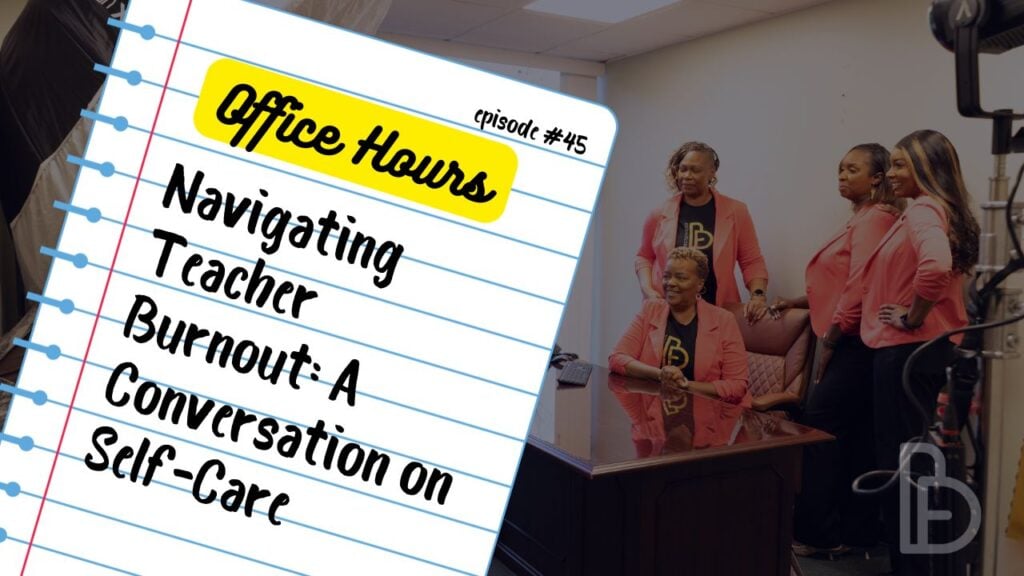
In this episode of BestieFinder Office Hours, Dr. Lisa and Dr. Karmel discuss the challenges faced by teachers, particularly the risk of burnout due to overwhelming expectations from managers. They emphasize the importance of communication and setting boundaries to maintain a healthy work-life balance. The conversation highlights the need for teachers to prioritize self-care and learn to say no without guilt, ultimately fostering a more supportive educational environment.
Chapters
00:00 Introduction to BestieFinder Office Hours
00:42 Understanding Teacher Burnout and Manager Expectations
03:38 The Importance of Communication in Education
06:16 Setting Boundaries and Saying No
08:12 Conclusion and Call to Action
Transcript
Dr. Lisa (00:03.668)
Hello, hello, hello and welcome everyone to BestieFinder Office Hours. You might notice that our Exhorter and Compassionate are not on the call today, but we are here in true teacher fashion on time and ready to join you. Hey, Dr. K.
Dr. Karmel (00:25.358)
How’s it going Dr. Lisa?
Dr. Lisa (00:27.71)
Pretty good, pretty good. Today has been a good day, given what’s been going on. But we’re here. We are awesome and amazing, Coach Nyala and Dean Kathy. We are awesome and amazing. We are going to rock today. So the teachers are in the driver’s seat today. And so we are going to talk about
Dr. Karmel (00:32.4)
yeah.
Dr. Karmel (00:44.494)
Yes.
Dr. Lisa (00:54.216)
something that came up with my mom when I was describing what BestieFinder does. So she said, how do people find you? What do managers look for when they supposedly come for your help? And so I talked about in team dysfunctions or related to something that happened a lot when I still work for other people, that because teachers…
teachers and particularly teacher administrators are very organized. We want to the structure up and we are efficient. We start getting to the point where we’re doing a lot more of the everyday work because it seems easier for us. And I warned that what happens to managers who start to rely heavily
Dr. Karmel (01:38.958)
Okay.
Dr. Lisa (01:52.421)
on your teacher administrators, particularly your teachers with all-seer administrators, because they’re doers and they’re get-it-done-ers, what happens is you run the risk of burning those folks out, and now you’ve burned a bridge, and your best employee doesn’t want anything to do with you anymore. So, Dr. K, as a fellow teacher, what are some things that…
need to happen to keep you from burning out? What do you need from a manager or partners or what have you to keep you from being like, you know what, I’m throwing this up in the air, I’m done, I’m gonna go do something else now.
Dr. Karmel (02:38.358)
Yeah, I think, well, for me, the biggest thing is when in my past jobs is like I, you know, that need to feel needed. I enjoyed that part to where it, like you said, it was easy to do. was tasks that was kind of easy to do. I could just knock them out, boom, boom, cross them off my list. And that was it. But as I did that more and more powered on. And so I think.
communication is most important when it comes to that, as far as with the manager, because a lot of them think, yeah, you did that. Let me add this to you. So a lot of them aren’t aware that feeling that sometimes teachers feel that overwhelming or even administrators feel like, okay, I got this, this and this. I know I can get it done, but that feeling of, okay, like this is getting to be a lot. And then, you know, that bridge gets burned, but.
I think it’s more for me, it’s like communication saying that, look, I know I can do this, I’ve done this, but in a way it’s kind of like a catch 22 because you think they should have sense enough to know that, you know, they keep piling this stuff on and on and on and I’m getting it done, but I’m like sinking in the process. And then, you know, it’s kind of like a cycle, you know, like a toxic cycle. But I think the biggest thing is like communication letting for me letting them know. Otherwise, I will just be like, know what, holla at y’all. I got y’all stable. Y’all are surviving. You’re thriving. I’m out of here. I’m finna go do something else. Or maybe I’ll just sit down and take a rest and then do something else, you know? But yeah.
Dr. Lisa (04:17.3)
And when the quiet quit was big, I think that’s a lot of what was happening. It’s like, know what? I need a break and y’all not gonna give me one, so I’m gonna slow down. And then of course the onus is gonna be on the teacher to say, I need to back up or I need to reject some things. And then, know, as a teacher you…
You’re not taking the stuff for them because you want to do everything. You’re taking it all because it needs to be done. And so there’s the guilt that happens, like, well, I can do it. I can do it. Shouldn’t I do it? And so I used to say, you’ve got to be ruthlessly selfish with your time. And folks are like, what? No, selfish, my gosh. Because the only person that’s going to set that boundary for you is you.
Dr. Karmel (05:13.006)
Absolutely, absolutely.
Dr. Lisa (05:14.094)
And it takes courage and confidence to see your value and go beyond that guilt to, I deserve a break, and I can take one because I’ve already provided value here.
Dr. Karmel (05:30.964)
Absolutely. And I did not learn that, honestly, Dr. Lisa, until I went through the Business Builders course. I did not learn how to say no and not feel guilty because it was something that I could do, and I could do it easily. And that’s that Teacher Gift coming in. Well, let me just go ahead and do it to help them out, to make it easier for them. But it was detrimental to me because I needed rest. I needed peace. It was disrupting things, you know.
And so yeah, boundaries, that communication of those boundaries, sticking to the boundary, and being okay with saying no. Just no. You know, I love you, I appreciate the opportunity, but at this point in time, no.
Dr. Lisa (06:14.224)
Exactly. And then stop talking. Because you want to give, you want to give . Look, you want to give all your legitimate reasons why you’re saying no, but the other person will see that as an opening. Like, well, if I can overcome those objections, that’s what they teach you in sales, right? If you can open to overcome the objection, then you can get them to do what you want. And so I always say, well, after you say no, and you’ve communicated clearly that no means no, stop talking.
And that is really, really…
Dr. Karmel (06:49.416)
yes, because you want them to know that you’re not, because some people take no as a rejection, like, you don’t like me anymore, or you don’t love me, or you don’t want to help me anymore, or you’re abandoning me. And it’s not abandonment, it’s just a boundary. You know, I still love you, but no, period. And I had to learn that by being in y’all’s circle.
Dr. Lisa (07:12.732)
But I’m glad you got there with us. I’m still working on our other friends. But yes, that’s really what it comes down to is that you’ve got to own that and be okay with the other person being upset until they get it. And sometimes they won’t get it. And that’s okay. It doesn’t feel okay necessarily, but it is in fact okay if they don’t get it because…
Dr. Karmel (07:32.29)
Yeah, absolutely.
Dr. Lisa (07:42.098)
You’re not really responsible for their feelings.
Dr. Karmel (07:46.306)
Absolutely.
Dr. Lisa (07:47.346)
You might feel bad that they feel bad. That’s like, I’m sorry. I’m sorry you feel that way. But I’m not sorry. I’m taking care of myself, right?
Dr. Karmel (07:53.486)
Right, exactly.
Dr. Karmel (07:59.608)
That’s it. That’s what that’s the continuation of, I’m sorry you feel that way. But you know, this is, or, and this is, you know, my way of taking care of myself. But you’re right. If we don’t say it, if we don’t do it, if we don’t take care of ourselves, who will? If we don’t speak up, who will? You know, and I have like a track record of when I didn’t say no,
Dr. Lisa (08:08.436)
You
Dr. Lisa (08:11.985)
Exactly.
Dr. Karmel (08:29.108)
And they just kept going and going and going, even down to my son. If I don’t say no, then he’ll do this, he’ll do that. So yeah, no means no. And I love you, I do, but this is not healthy for me.
Dr. Lisa (08:47.484)
And 100 % on teenagers saying, oh, well, she didn’t say ‘not you.’
Dr. Karmel (08:55.688)
Absolutely.
Dr. Lisa (08:58.452)
All right, well, this is going to be short and sweet for us today because again, the Teachers are in the driver’s seat and we’re not going to give you too much or more than you can handle. So thank you for tuning in to BestieFinder. Join us at bestiefinder.net/quickscan so you can get a glimpse of your gifts and start treating yourself and your Teachers better. And on that note, see you next week.